
The Power of Repair
Lucas was hurting the cat in a particularly worrisome way. We’d had talks several times that day about how to treat her. I truly felt scared that she would be seriously injured.
I yelled “Stop it!”. Loudly. Reeeeaaallly loudly.
He left the room with his hands over his ears, saying, “I’m ignoring you!” He came back in and started hitting me with his jacket. I told him I was sorry that I yelled at him, and that I had been really worried about the cat. He told me he did not accept my apology. I told him I couldn’t stay and be hit, so I needed to go to another room for a while. And I did.
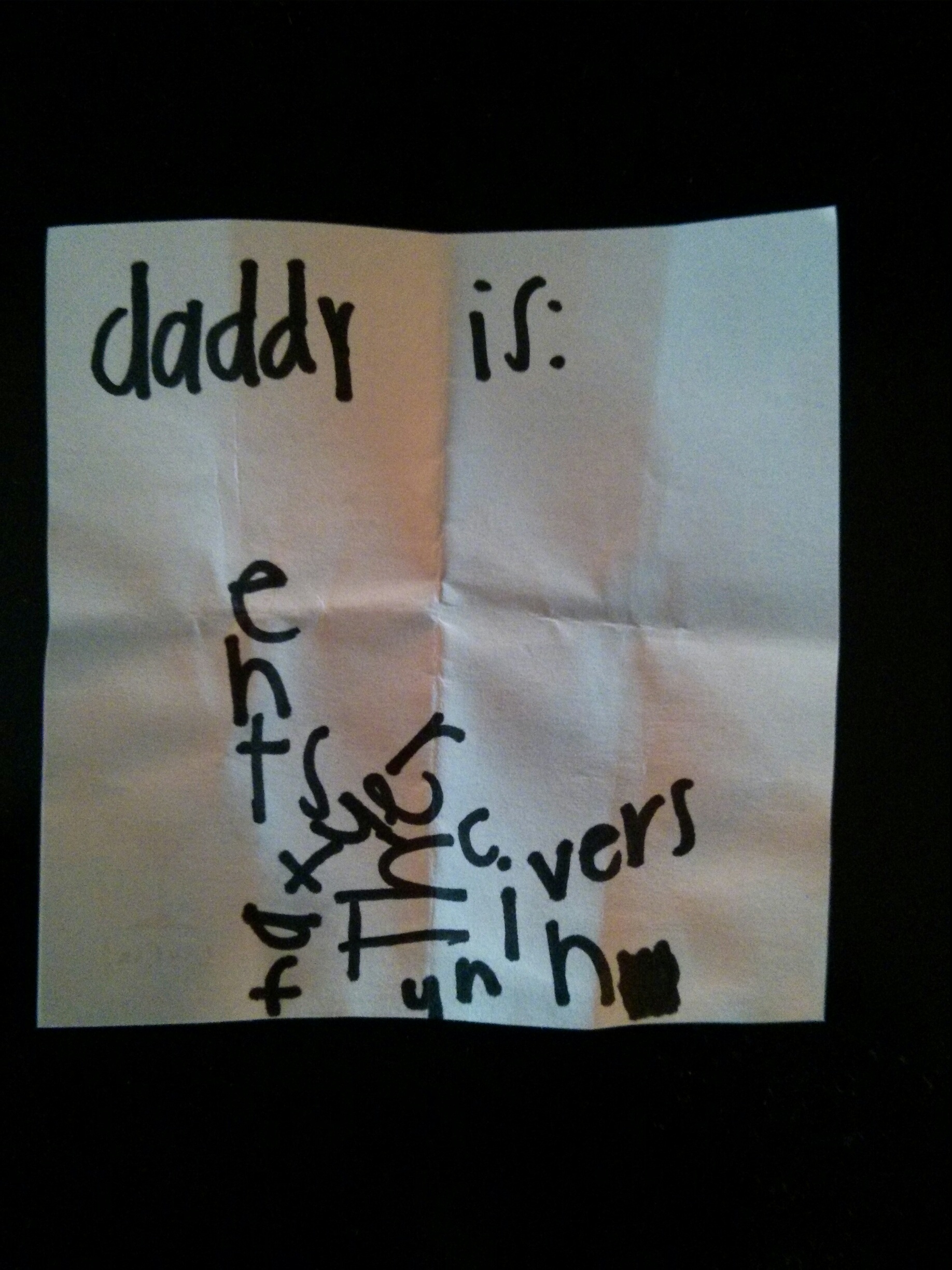
When I came back, I busied myself in the kitchen, and he was quietly writing something in the living room. I went over to him again, and said, “Hey, buddy, I’m really sorry I yelled at you. I really was very worried about the cat. Let’s work together to figure out how we can keep the cat safe with no yelling.” This time he said, “I accept.” He added, “…and now I don’t have to finish writing this.” I looked at the paper in his hands, and saw “Daddy is:” at the top, and below he had written in a kind of crossword style “stupid”, “dumb”, and “mean”. Ouch. I told him I was really glad that he didn’t need to finish it.
Then, he told me to hang on, and not watch him. After a few minutes he showed me he had created a code, and that I should try to solve it. The letters were jumbled and turned around, and with a few clues, I was able to solve it.
It said, “Daddy is: the best father in the universe.”
This is a wonderful example of the power of repair. A handful of words, and I went from being a smudge of bug guts on the bottom of a shoe to being the paragon of parents everywhere. But nothing changed about me. He felt disconnected from me, and then he felt reconnected with me.
Repair in the Positive Discipline context is a specific process, and it goes like this:
- Re-gather: Make sure you have both cooled down and un-flipped your lids. This may take a little while, or as much as a few days.
- Recognize: This is internal to yourself. Notice what it was that you did to create the problem. Even though another person may have contributed, this is to take responsibility of your own part in what happened.
- Reconcile: VERY briefly acknowledge your mistake, and express your regret (“I’m sorry that I…”, or “I feel bad about doing…”). Don’t spend time or energy making excuses or explaining your actions, keep it short.
- Resolve: Figure out how to fix it, or briefly describe your plan for not repeating the mistake in the future. This means really learning from the experience and changing your behavior in a helpful way.
Remember, there is no such thing as a perfect parent, and we will all continue to flip our lids and make mistakes from time to time. The process of repair gives you a chance to model cleaning up afterwards and fixing your mistakes, and is a powerful opportunity to teach these skills to your child.
Discover more from sharing perspectives
Subscribe to get the latest posts sent to your email.
Trackbacks & Pingbacks