
Calm.

“Be like a duck. Calm on the surface, but always paddling like the dickens underneath.” – Michael Caine
Dan Siegel has a short two-minute video where he talks about a model for the human brain called “the brain in the palm of your hand”. You can watch it here:
Siegel describes bringing your thumb in towards the center of your palm and then folding your fingers down over it. Your thumb represents the limbic system of your brain, or your reptilian brain, that legacy of evolution that is responsible for processing and regulating emotion and initiating the fight or flight response. Your fingers represent your cortex, that higher level of function that is the seat of reason and cognition, and that has the role of regulating the limbic system.
When emotions run high or the fight or flight instinct is triggered, Siegel illustrates by straightening his fingers to expose his thumb (“flipping his lid”), showing that the limbic system is now in control – thinking, reasoning, calming, all become challenging if not impossible.
So that’s part one of what we’re exploring today.
Part two involves something called “mirror neurons”, which Dr. Siegel also helpfully explains here: https://www.youtube.com/watch?v=Tq1-ZxV9Dc4
Mirror neurons are present in all of our brains, and can be described like this:
“Mirror neurons represent a distinctive class of neurons that discharge both when an individual executes a motor act and when he observes another individual performing the same or a similar motor act.” – National Institutes of Health
These neurons fire not only when I hit a baseball, but also when I see you hit a baseball… is that not absolutely amazing?
It gets better. Mirror neurons can fire for emotional states as well. That’s why if I see someone laughing happily I might smile myself. Or if I see someone yelling angrily…
So bringing together part one and part two – and you probably already see where I’m going with this – when I flip my lid, the thinking and reasoning part of my brain has less influence, and if I flip my lid at my son, he’s likely to flip his lid right back. And both of us will need a cooling down and repair period before we can even begin to interact reasonably again.
Think about how it feels when someone – your child, your spouse, the guy that thinks you stole his parking space – “flips their lid” at you… are you able to observe dispassionately? Or are you inclined to respond in kind?
Think about how it must feel for them when we flip our lid at our kids.
Let’s pause here for a moment to take a look at our card:
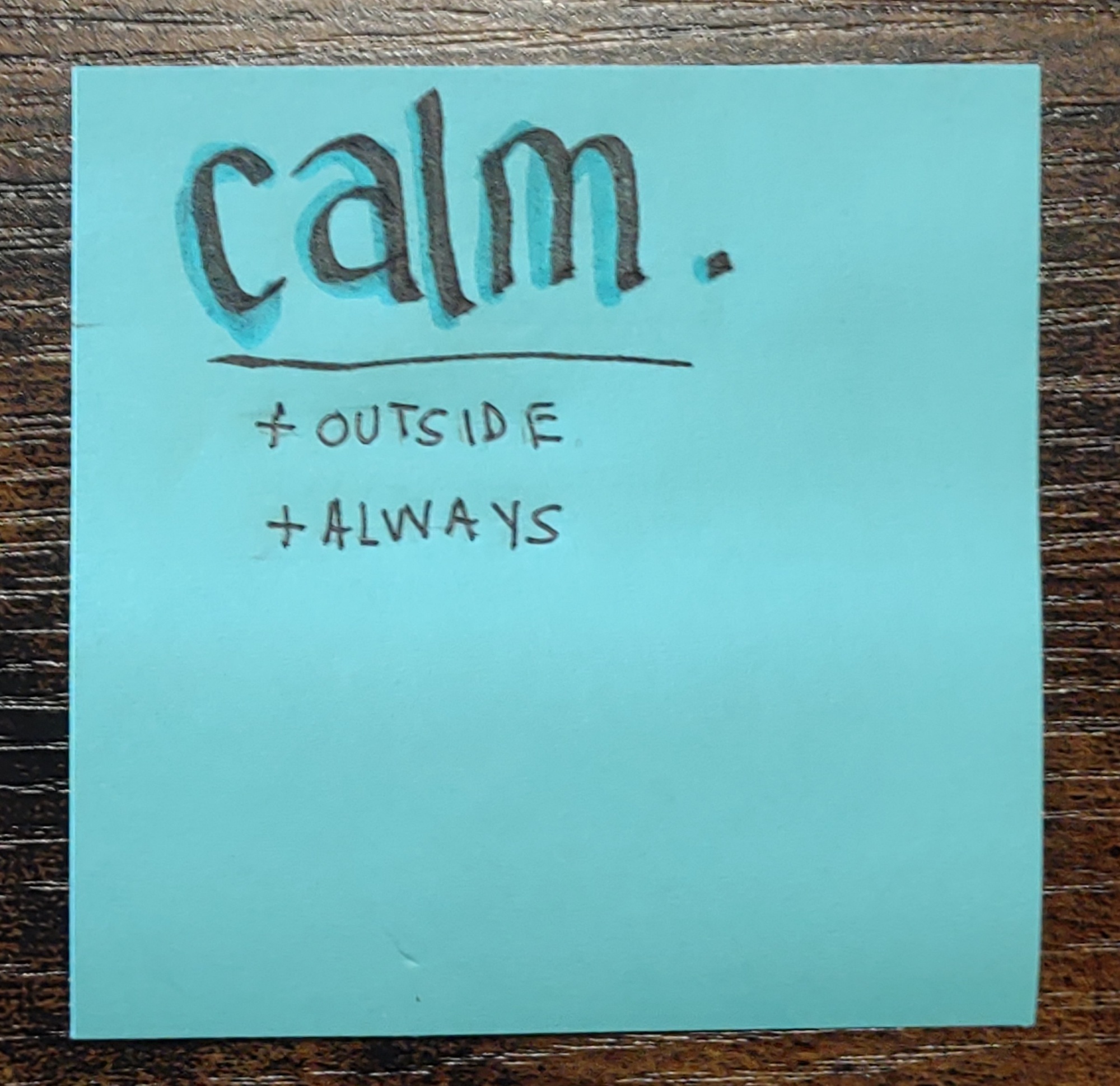
When dealing with co-workers, children, friends, family, maintaining a calm outward demeanor helps to ward off countless potential disagreements and clashes before they can even get started. You can use mirror neurons to your benefit… the calmer you remain outside, the calmer others are encouraged to be, inside and out, and the less likely they are to flip their lids in the first place.
Always be aware of the consequences of flipping your lid. And do your best to exude calm outwardly, regardless of the state of your own lid, over which you ultimately have no real conscious control.
Finally, if you do flip your lid at someone, all is not lost… you can always repair.

How do you maintain calm when everyone around you is flipping their lids? How do you get calm when your own lid is flipped? Let us know what you do in the comments, and I’ll share out your ideas in a future post.
For now, see if you can find a way to separate yourself from the situation until you or they have had a chance to make themselves calm. Reasonable discourse is simply not possible with flipped lids.
Another idea (if yours is the lid that flipped) is to try to purposefully engage your cortex (your fingers from “the brain in the palm of your hand”) by doing something that requires it by spelling things backwards, listing facts, or doing mental math – try counting backwards from 100 by 7s, for example.
Finally, if the other person has flipped their lid, there are a few things you can try that might help:
- Use your mirror neurons. The more you model calm and stay connected, the easier it is for someone else to calm down. So lower and slow your voice, and engage your cortex.
- Acknowledge feelings. Use few words, and a calm, empathetic tone.
- Invite them to take a break. This works best as a genuine option rather than a command.
- Simple tasks may engage their cortex. You might ask them if they remember how to spell someone’s name, for example.
- Ask for their help. Especially if they’ve already begun to de-escalate but aren’t quite there, change the subject and ask for their help: “I can tell it’s not a good time to talk about ‘x’, but would you be willing to help me with ‘y‘”?
Again, please let us know how you calm yourself in the comments… we’re always looking for new tips!

Discover more from sharing perspectives
Subscribe to get the latest posts sent to your email.
 sharing perspectives
Trackbacks & Pingbacks